
Has Childhood Become Too Adult?
There has never been more discussion about childhood than there is today. Conversations about children's mental health, resilience, anxiety and emotional wellbeing have become increasingly mainstream, and with that has come a growing debate about how childhood itself is changing. Screens, social media and academic pressure are often presented as the defining features of modern childhood, yet these explanations can feel overly simplistic. They encourage us to look for individual causes rather than asking a broader developmental question.
Perhaps the more important issue is not whether childhood has changed, but whether the experiences that support healthy development are being given the value they deserve.
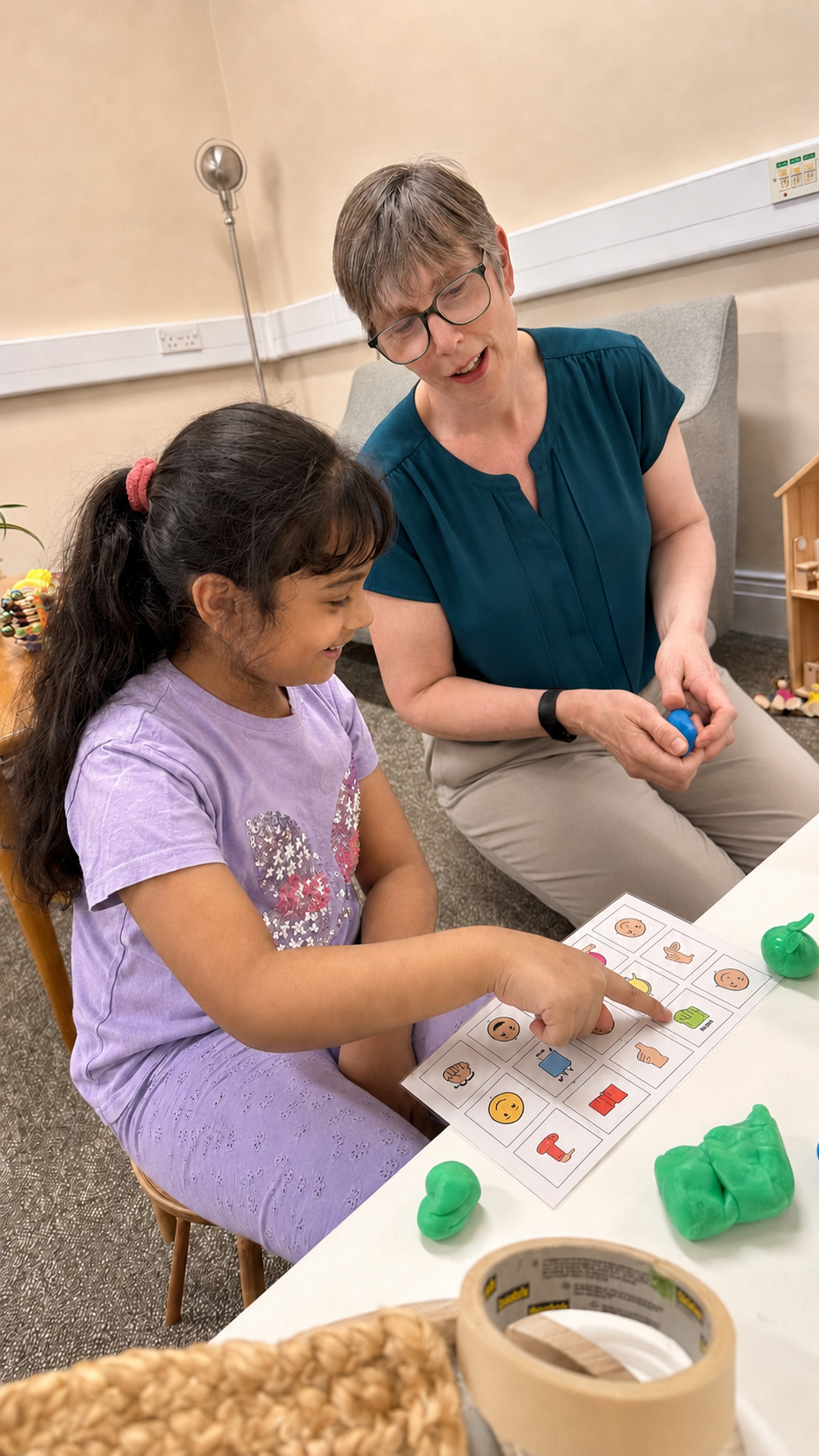
Developmental theory has long recognised that childhood is not simply a period of waiting for adulthood. It is a distinct stage of life with its own developmental tasks. Donald Winnicott's work on play described play as central to emotional development, not because it entertains children, but because it provides the space in which they begin to explore ideas, relationships and their own internal world. Through play, children experiment with independence, negotiate social relationships, tolerate frustration, solve problems and begin to make sense of emotions that cannot yet be put into words. Play is not separate from development. It is one of its primary mechanisms.
Despite this, play has increasingly come to be viewed as something that happens once the important things have been finished. Childhood has become progressively more structured, with growing emphasis placed on measurable achievement, organised activities and productivity. These opportunities undoubtedly offer many benefits, but they also risk shifting our understanding of what childhood is for. When developmental experiences become secondary to measurable outcomes, we may unintentionally overlook the processes that make those outcomes possible.
Research has increasingly highlighted the importance of free play in supporting children's emotional, social and cognitive development. Developmental psychologist Peter Gray argues that opportunities for self-directed play are fundamental to learning independence, problem-solving and emotional regulation, yet have steadily declined over recent decades. Peter Gray's research on play
At the same time, children are encountering an increasingly adult world. Information is more accessible than at any other point in history. Through social media, news platforms and constant digital connectivity, children are exposed to global conflict, economic uncertainty, climate anxiety and complex social issues from an early age. Many also become aware of adult conversations, family pressures and societal expectations long before they have the developmental capacity to fully understand or process them. Exposure alone, however, does not drive development. Development depends upon timing.
Children benefit from gradually expanding their understanding of the world as their emotional, cognitive and social capacities develop. Experiences that are introduced too early can become overwhelming rather than enriching, whilst experiences that support development, such as imaginative play, boredom, exploration and increasing independence, appear to occupy less space within modern childhood than they once did. This growing conversation is also reflected in wider research into children's wellbeing. Organisations such as UNICEF Innocenti – Child Wellbeing continue to highlight that children's wellbeing is shaped not only by education and health, but by the environments in which they grow, play and develop relationships.
This is not an argument for returning to a previous generation or suggesting that childhood was somehow better in the past. Today's children benefit from greater awareness of mental health, stronger safeguarding, improved educational opportunities and increasing recognition of neurodiversity. Childhood has evolved in many positive ways. The challenge is ensuring that our understanding of development evolves alongside it. Research organisations including Anna Freud Centre continue to demonstrate the importance of developmentally informed approaches to children's mental health, recognising that emotional wellbeing cannot be understood separately from children's relationships, environments and developmental experiences.
Perhaps the question is not whether childhood has become too adult, but whether we have unintentionally inverted children's developmental priorities. We increasingly ask children to engage with ideas, responsibilities and expectations beyond their developmental stage, whilst giving less value to the very experiences that developmental theory has long recognised as fundamental to healthy emotional growth. Protecting childhood is therefore not about resisting change. It is about recognising that lifelong emotional wellbeing is built through developmentally appropriate experiences, introduced at developmentally appropriate times. When we understand childhood in this way, we are not simply supporting children in the present. We are laying the foundations for lifelong emotional wellbeing.

Teen Counselling
Specialist therapy for teenagers and young adults experiencing anxiety, low mood, emotional distress, school-related difficulties and challenges associated with ADHD, autism and other neurodevelopmental differences.
Child Therapy
When a child is struggling, understanding why is just as important as recognising the symptoms. Child psychotherapy helps us explore the emotional, developmental and relational factors that may be contributing to their difficulties.