
Counselling for Teenagers & Young Adults aged 13-25
Specialist counselling and psychotherapy for teenagers and young adults experiencing anxiety, low mood, school or college difficulties, emotional challenges and neurodevelopmental differences.

When might counselling help?
Therapy can be helpful when your teenager or young adult's emotions, behaviour or relationships are beginning to affect their wellbeing, education or everyday life. You may be noticing increasing anxiety, low mood, emotional withdrawal, school, college or university avoidance, friendship difficulties, low self-esteem, emotional dysregulation or a young person who no longer seems like themselves. We also support young people experiencing difficulties associated with autism, ADHD and other neurodevelopmental differences..
Our approach
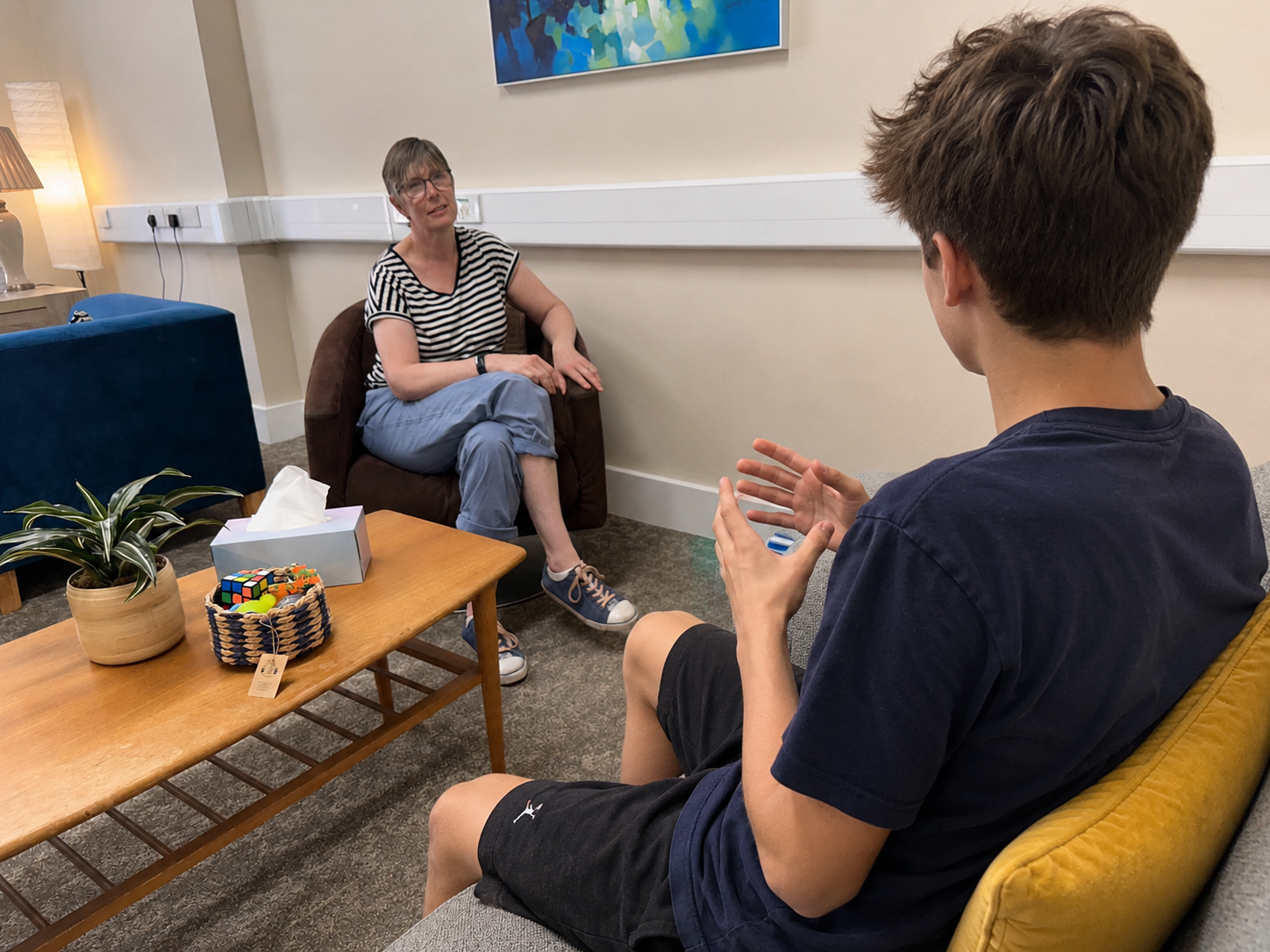
Therapy provides teenagers and young adults with a consistent, confidential space away from the demands of school, college, university and everyday life, where they can explore their thoughts, emotions and experiences with the support of a specialist therapist.
By taking the time to understand every aspect of a young person's life, including their development, relationships, strengths, identity and the experiences that have shaped them, we develop an understanding of what may be contributing to the difficulties they are facing. This allows therapy to be tailored to their individual needs, supporting meaningful and lasting change.
We recognise that family, education and wider support networks all play an important role in a young person's wellbeing. With their consent and where appropriate, we work collaboratively with parents, schools, colleges, universities and other professionals to ensure they receive consistent support across the environments that matter most.

What to expect
Our first priority is to ensure your teenager or young adult is accessing the right support. We begin with a free 15-minute telephone consultation to answer any initial questions and discuss whether therapy may be appropriate.
If you decide to proceed, we will invite you to an initial parent consultation (or an individual consultation for young adults attending independently) to explore your concerns, gain a fuller understanding of the difficulties they are experiencing and discuss the changes you have noticed.
Your teenager or young adult will then be offered three assessment sessions. These sessions give us the opportunity to get to know them, understand their strengths and challenges, and begin to identify how we may be able to help.
Following the assessment, we will meet with you—or directly with the young adult where appropriate—to share our understanding, discuss our recommendations and agree the next steps together. For many young people, this will involve ongoing therapy with the clinician and therapeutic approach best suited to their needs. If we believe another form of support would be more appropriate, we will explain our recommendations and support you through the next steps.
Explore The Therapies We Offer

Adolescent Psychotherapy
Learn how Child & Adolescent Psychotherapy helps teenagers and young adults understand difficult emotions, relationships and life experiences.

Creative Teen Counselling
Find out how Teen Creative Counselling combines creativity, conversation and therapeutic techniques to help young people express themselves, build confidence and navigate life's challenges.

Meet our Therapy Team
Find out more about our Child Psychotherapists and Play Therapists and the experience they bring to supporting children and families.
-
It is normal for teenagers to experience changes in mood and behaviour as they grow. Therapy may be helpful if difficulties such as anxiety, low mood, emotional dysregulation, school, college or university avoidance, friendship difficulties or changes in behaviour are beginning to affect their wellbeing or everyday life. Therapy can also provide support following experiences such as bullying, family separation, bereavement or other significant life events.
-
Depending on their age and developmental stage, they may communicate through creative activities or conversation. Therapy provides a confidential space where teenagers and young adults can explore their thoughts, emotions and experiences at their own pace, with the support of a specialist therapist.
-
Yes. Parents continue to play an important role in supporting teenagers, while also recognising their growing independence. We begin with a parent consultation and hold review meetings throughout therapy where appropriate. These meetings provide an opportunity to discuss progress, offer guidance and ensure everyone is working together in the young person's best interests.
-
There is no set number of sessions because every young person is different. Following the assessment, we will discuss our understanding and recommend the approach that best meets their needs. Some young people benefit from shorter-term support, while others find longer-term therapy more helpful.
-
It is common for teenagers to feel unsure about therapy, particularly if they have never spoken to someone outside their family before. We take time to build trust and work at a pace that feels comfortable. Many young people become more engaged once they realise therapy is a space where they can talk openly without judgement.
-
Confidentiality is an important part of therapy and helps young people feel able to speak openly. We will always discuss with your teenager how information is shared and keep you involved where appropriate. If we are ever concerned about their safety or the safety of someone else, we will always take the necessary steps to protect them and discuss this with you wherever possible.
Your Questions, Answered
Contact us to arrange a free phone call with one of our clinicians